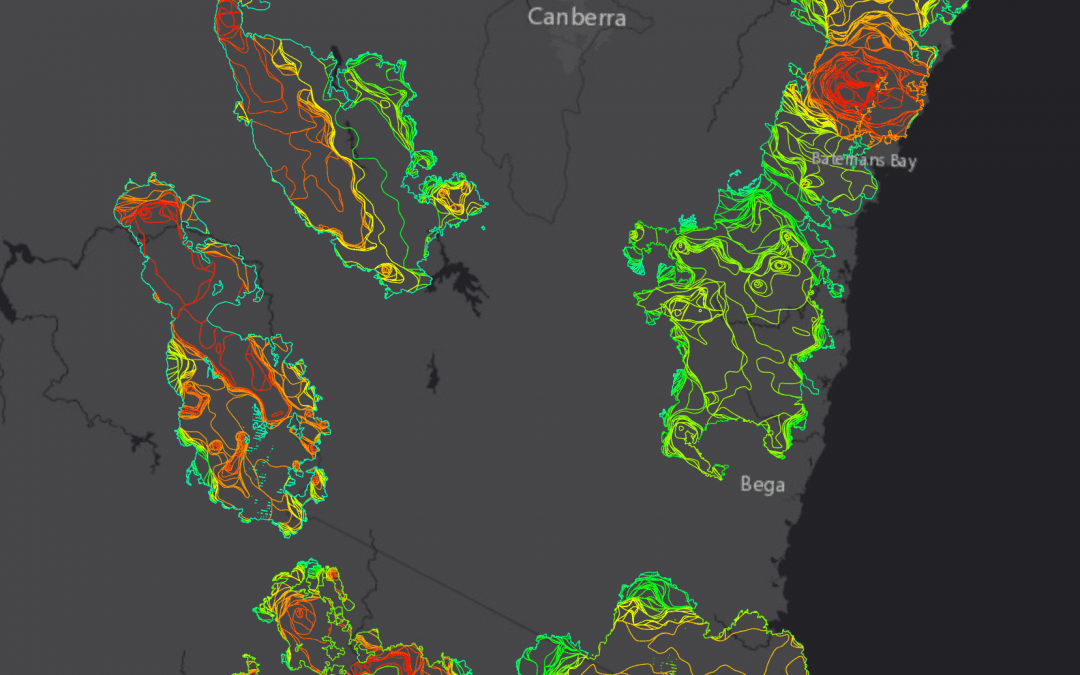
FLARE Wildfire Research is working closely with fire agencies in south-eastern Australia to model risk and the mitigation available from different management strategies. Much of this work generates landscape-scale insights into treatment effectiveness. In this NSW...
Changing climates are creating significant fire risks to Australian plantations. Fires are predicted to become more frequent and intense, potentially resulting in increased plantation losses to wildfire. Existing fire simulation models do not adequately represent fire...
A comprehensive bushfire risk management framework currently exists in New South Wales (supported by legislation and policy). This framework provides a platform for the development of a Bushfire Risk Management Plan. In recent times there have been significant...
Fire managers use a range of methods to manage fuels as a means of reducing bushfire risk. Mulching is one such method where the understorey vegetation is shredded, chipped or mulched to reduce the bushfire hazard and make fire suppression more effective. Our research...
Many species are adapted to a particular fire regime and major deviations from that regime may lead to localised extinction. Here, we quantify immaturity risks to an obligate-seeder forest tree using an objectively designed climate model ensemble and a probabilistic...